Thinking about keeping your boat behind your home in Tropic Isle? Before you picture sunrise runs on the Intracoastal, make sure your canal, dock, and route actually fit your vessel. Small details like depth at low tide or a low bridge can make the difference between easy weekends and constant headaches. This quick guide gives you practical steps to verify access, match your boat to the dock, and plan safe, smooth cruising. Let’s dive in.
Tropic Isle canals: what to verify
Tropic Isle’s residential canals connect to the Intracoastal Waterway. Each canal has its own width, depth, turning room, and quirks. You want to confirm the specifics for the exact property and the route you plan to use.
Measure width and turning room
- Confirm the horizontal clearance from seawall to seawall and the distance to a safe turning basin.
- Narrow canals limit beam and make docking tough for larger boats.
- If the lot sits on a cul-de-sac or dead-end canal, plan for backing maneuvers and more room to swing.
Confirm depth at low water
- Ask for depth at Mean Low Water or Mean Lower Low Water, then compare it to your boat’s draft.
- Do not rely on general canal depth assumptions. Depth can vary from property to property.
- Order a property-specific sonar depth survey at low tide to know your true margins.
Scan for obstructions and shoaling
- Look for submerged pipes, debris, or sand shoals that reduce usable draft.
- Review recent dredging or maintenance records to understand any depth changes.
- Speak with nearby marinas and neighbors for practical reports on shoaling patterns.
Map your route to open water
- Count the number of bends and tight passes on the way to the Intracoastal.
- Note any speed or no-wake zones that affect travel time.
- If ocean access is your goal, factor in bridge operations along the Intracoastal.
Bridges and vertical clearance
Bridges often determine what you can run, especially if your boat has a tall hardtop or mast. You need clear data for every bridge between your dock and your destination.
Identify every bridge on your route
- List each bridge from your canal entrance to your regular cruising grounds.
- Note the bridge type: fixed or movable.
- Record the published vertical clearance for fixed bridges and the opening procedures for movable ones.
Convert clearance to your timing
- Published bridge clearances are typically given at Mean High Water.
- Use local tide predictions to adjust the published number for the time you plan to pass.
- Re-check before weekend trips and seasonal changes, since water levels shift.
Movable bridges: procedures matter
- Know the opening schedule and how to request an opening by radio or phone.
- Plan for wait times and no-wake approaches.
- Confirm any width limits or restrictions for wide-beam vessels.
Watch for temporary changes
- Bridge maintenance can reduce available clearance or alter opening times.
- Review current navigation notices before you go.
- If you are buying soon, ask your agent to confirm there are no active restrictions on your route.
Match your dock and your boat
Your dock and seawall must safely support your vessel’s dimensions, weight, and day-to-day use. Think about how you leave, return, tie up, and service the boat.
Common residential setups
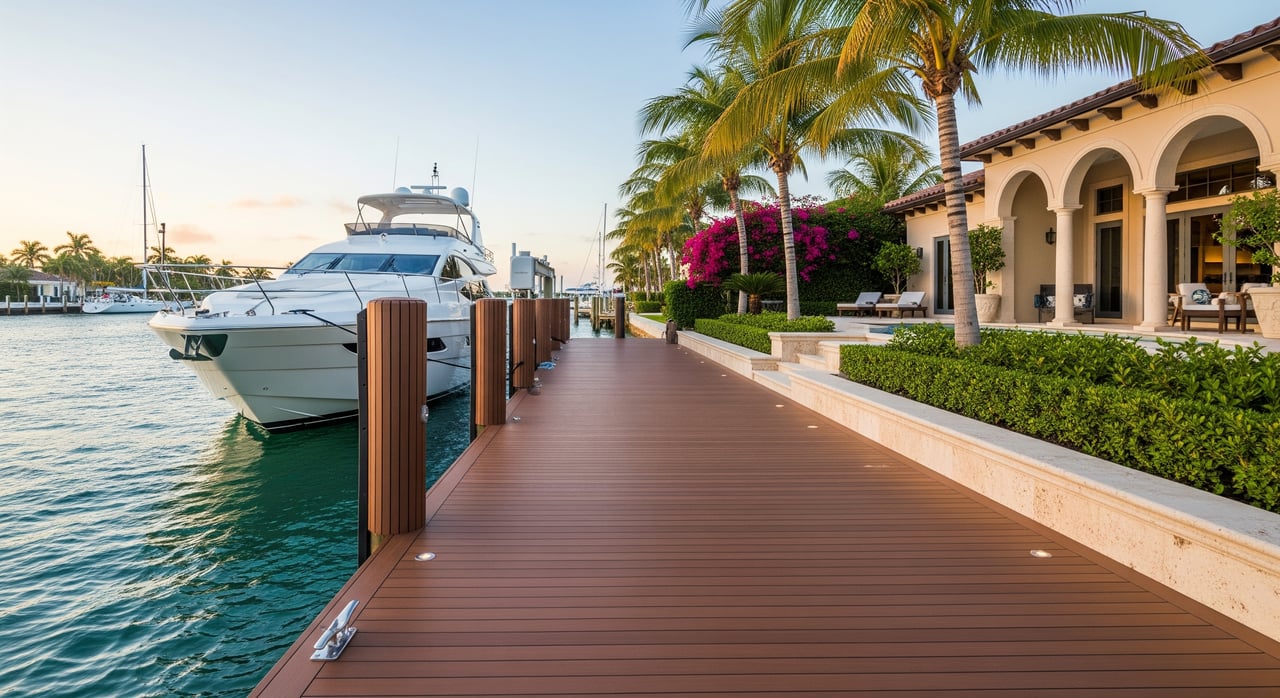
- Fixed docks: Wood or concrete, reliable for small to mid-sized powerboats.
- Floating docks: Adjust to tide, helpful where water-level swings or shallows exist.
- Boat lifts: Protect the hull and cut down on bottom growth, but have weight, beam, and length limits.
- Davits and personal lifts: Good for small boats, dinghies, and jet skis.
Fit by LOA, beam, draft, and air draft
- Length overall: Ensure the berth and pilings fit total length, including swim platforms and anchors.
- Beam: Check canal width and piling spacing, not just the slip width.
- Draft: Compare measured depth at low water to your fully loaded draft.
- Air draft: Make sure fixed bridges and overhead lines do not limit your top structures or mast.
Seawall condition and utilities
- Inspect seawall age, tie-backs, and visible wear; request permit and repair history.
- Confirm shore power needs and available amperage, plus water access and lighting.
- Look for proper cleats, chafe protection, and safe night visibility.
Permits, submerged lands, and rules
- Verify that the dock and lift are properly permitted with city and county records.
- Confirm any state submerged land requirements or leases for structures beyond the property line.
- Review HOA or neighborhood rules for boat size limits, lifts, and number of vessels.
Buyer due diligence checklist
Use this list to move from “nice dock” to “proven fit” before you close.
- Order a low-tide sonar depth survey for the slip and immediate approach.
- Get a certified survey showing riparian rights and dock placement.
- Inspect the seawall and pilings with a qualified marine contractor or engineer.
- Pull city and county permit records for docks, lifts, and seawall work.
- Review any HOA covenants affecting boat size, number of vessels, or lift equipment.
- Compare your boat’s draft and air draft to measured depths and bridge clearances.
- Check navigation notices for hazards or bridge restrictions on your route.
- Confirm flood zone data and consider storm-surge exposure for insurance planning.
- If you already own the boat, order a full marine survey and confirm the fit with your measured data.
- Ask for local marina contacts for haul-outs and hurricane plans.
Lifestyle and cost considerations
Beyond the technical checks, think about how you want to use the boat and what it will cost to keep it ready.
- Time to open water: Count no-wake stretches and potential bridge waits.
- Maintenance: Budget for dock repairs, piling work, lift servicing, and periodic upgrades.
- Insurance: Factor in boat policy costs and any impact on homeowner premiums.
- Noise and traffic: Expect seasonal variations in Intracoastal activity near popular routes.
- Storm planning: Decide where you will secure the boat during hurricanes and how you will prep lifts or lines.
- Environmental zones: Follow posted speed and manatee protections near shore.
Smart questions to ask sellers
Bring this list to showings and inspections to get specific, useful answers.
- What is the measured depth at the dock at low tide, and has the canal been dredged recently?
- How far is the nearest turning basin, and can it accommodate my boat’s LOA and beam?
- Are there fixed bridges on my route to the Intracoastal or ocean? What clearances apply and how are openings handled?
- Do the current dock and lift have documented permits, and are submerged land requirements satisfied?
- What is the seawall’s age and repair history, and who has maintained it?
- Are there HOA or city rules that limit boat size, number of vessels, or lift installations?
- Where do local owners haul or secure vessels during hurricane season, and what are the options?
Work with a local advisor
A waterfront home should support your lifestyle, not limit it. When you combine accurate measurements, updated bridge details, and the right dock setup, you get confidence at closing and easy weekends on the water. If you are comparing properties in Tropic Isle or elsewhere along the Delray Beach coast, a guided process will save you time and prevent costly surprises.
Ready to evaluate a specific property or plan a dock upgrade with confidence? Schedule a Private Consultation with Michelle Sadownick for local guidance, vetted marine contacts, and a step-by-step plan from contract to first cruise.
FAQs
What boating factors make or break a Tropic Isle property?
- Depth at low tide, canal width and turning room, and bridge clearance on your route are the top constraints, followed by dock type, lift capacity, and seawall condition.
How do I find bridge clearance info for Delray Beach routes?
- Check published clearances on official charts, confirm opening procedures with local authorities, and adjust for tide at your planned transit time.
Do I need permits to add or change a boat lift?
- Yes, you should verify city and county permits, plus any state submerged land requirements, and ensure HOA rules allow the equipment you plan to install.
Can I keep a sailboat in Tropic Isle?
- It depends on mast height and fixed-bridge clearances, plus canal width and depth for maneuvering; verify each segment from your dock to open water.
How can I confirm the actual depth at my dock?
- Hire a local marine surveyor to run a sonar depth check at low tide and compare the readings to your boat’s loaded draft for safe margins.