
What Boynton Beach's Marina Overlay Means for Waterfront Buyers
September 10, 2026
September 10, 2026
If you've been watching construction cranes rise along South Federal Highway and assumed Boynton Beach is about to flood its Intracoastal frontage with new towers and denser waterfront inventory, the city commission's own language says otherwise. On July 7, 2026, the commission unanimously approved a new Marina Overlay District covering the west side of the Intracoastal Waterway from Gateway Boulevard south to Woolbright Road. City officials were explicit about what the overlay does not do: it does not automatically rezone any properties, it does not offer density bonuses for residential development, and it does not loosen environmental protections or regulations. What it does require is narrower and, for anyone comparing waterfront purchases in this corridor, more consequential. New developments inside the district have to build a minimum 12-foot-wide public promenade along the water, stitched together property by property into a continuous public walkway.
That distinction matters if you're pricing waterfront here against other stretches of Palm Beach County coastline. The story most buyers are telling themselves, that a "waterfront destination" push means more private frontage coming to market, isn't what's actually written into the ordinance. The mechanism is public access, not private expansion.
City Planner Tyler Tornese described the motivation behind the district at the commission's June 16 meeting, tracing it back to a joint City Commission and Community Redevelopment Agency workshop held the previous November. His framing was direct:
"We want to encourage marine uses. We want to attract new businesses. We want to, most importantly, activate that public waterfront along the Intracoastal."
That word, activate, is doing real work. It's not a rezoning play. It's a stitched-together public walkway requirement that any new development inside the overlay has to satisfy before it can build.
Here's where the gap between assumption and ordinance actually lands for a buyer:
| What a buyer might assume | What the ordinance actually says |
|---|---|
| New waterfront construction means more density and more units coming online | The overlay grants no density bonuses and doesn't rezone existing parcels |
| Redevelopment rules are loosening environmental review to move faster | Environmental protections and regulations are unchanged |
| "Waterfront destination" means more private, gated water frontage | The core requirement is a mandatory 12-foot public promenade on new construction |
If you're comparing a Boynton Beach waterfront listing to a similar property elsewhere in the county, this is the detail that separates the two markets. A future buyer in a new building inside this corridor isn't necessarily getting more exclusive water edge. In many cases they're getting a public walkway running along the water side of their building, by design.
Boynton Harbor Marina, the anchor of this stretch, has operated on a public-access premise for two decades already. The Boynton Beach Community Redevelopment Agency purchased the marina in 2006 specifically to guarantee public access to the city's waterways and preserve the working marine industry rather than let the site convert to private residential use, which was the trajectory of other South Florida marinas at the time. Two Georges, the seafood restaurant that's anchored Ocean Avenue since 1978, and Prime Catch, opened in 2004 by the same Therien family behind Banana Boat, both sit directly on that public marina footprint. Boaters passing through on the Intracoastal have been walking past working docks, fuel pumps, and restaurant patios here for years. The new overlay doesn't introduce a foreign concept to this waterfront. It extends an existing pattern to future private development that wasn't previously required to participate in it.
That context should reframe how a buyer reads news of Boynton's "waterfront transformation." The city isn't pivoting from private exclusivity toward public access. It's requiring new private development to match the public character the marina district has held since 2006.
Two projects make this concrete. The Dune, under construction on South Federal Highway just south of downtown, is moving forward with structured parking, upscale amenities, and planned views of the Intracoastal and ocean, based on aerial documentation from July 30, 2026. Ocean One, a residential project sited between Boynton Beach Boulevard and East Ocean Avenue, has been discussed since 2018 and is now visibly under construction, close enough to the marina that it could help connect downtown's restaurants, waterfront, and shopping into one walkable stretch.
Both sit inside or adjacent to the Gateway Boulevard to Woolbright Road overlay footprint. That's the friction point buyers need to check before assuming a given Boynton Beach waterfront address carries the same rules as the one two blocks away. The overlay applies to a specific geographic corridor, not to every property in the city that touches water. A listing north of Gateway or well south of Woolbright isn't subject to the same promenade requirement, even if the marketing copy uses the same "waterfront destination" language.
This is also why it's worth separating waterfront-specific policy from the city's broader redevelopment appetite. The BBCRA has been assembling a separate 5.65-acre site at 480 W. Boynton Beach Boulevard, well west of Seacrest Boulevard and nowhere near the Intracoastal, acquiring 3.3 acres around the property in April 2026 and an adjacent parcel in May 2026. Meanwhile, the 20-plus-year Golden Corral at 389 Winchester Park Boulevard closed for good after dinner service on July 26, 2026, on a 2.67-acre site that had already been listed for $4.85 million in late 2025. Both are real signals that Boynton Beach's corridors are repricing ahead of redevelopment. Neither is governed by the Marina Overlay District's promenade requirement, because neither sits on the water. If you're reading every headline about Boynton Beach's growth as evidence of one unified mechanism, you'll misjudge what's actually driving value on the waterfront specifically versus the inland corridor generally.
For a buyer weighing Boynton Beach against other waterfront corridors in the county, the practical takeaway isn't that the city is becoming more or less desirable. It's that the specific value proposition of new waterfront construction here is different from a market where private frontage is the selling point. If unobstructed, non-public water access at your unit's edge is a priority, you'll want to confirm whether a specific new-construction address falls inside the Gateway to Woolbright overlay and, if so, ask what the promenade condition means for that particular building's ground-level or water-facing units. If instead you're drawn to the idea of a walkable, restaurant-and-marina waterfront where public activity is part of the appeal rather than a drawback, this corridor is building exactly that, on purpose, and has been since the marina's 2006 public-access purchase.
Either way, the headline that Boynton Beach is "finally" becoming a waterfront destination is only half the story. The more useful question for a buyer is which mechanism is producing that destination, public promenade requirements or private density, and whether the specific property you're considering sits inside the boundary where that mechanism actually applies.
Does the Marina Overlay District apply to existing buildings, or only new construction? Based on the ordinance as reported, the 12-foot promenade requirement attaches to new developments within the district. Confirming how it applies to renovations or redevelopment of existing structures on a specific parcel is worth verifying directly with the applicable requirement before making assumptions.
Does this overlay rezone Boynton Beach's waterfront for taller buildings? No. City officials were specific that the overlay does not automatically rezone any properties and does not offer density bonuses for residential development.
Is every waterfront property in Boynton Beach inside this district? No. The overlay's footprint runs along the west side of the Intracoastal from Gateway Boulevard south to Woolbright Road. Properties outside that stretch, even if waterfront, aren't subject to this specific requirement.
Does the promenade requirement mean less privacy for waterfront condo buyers? It can, depending on the building's layout and which units sit closest to the water edge. That's a detail worth asking about directly for any specific new-construction listing inside the overlay rather than assuming based on marketing language alone.
If you're comparing waterfront options in Boynton Beach against other corridors in Palm Beach County, and want a clear read on which mechanism is actually driving value on a specific listing, Michelle Sadownick can walk you through it. Schedule a Private Consultation to talk through what a given address's zoning position actually means before you make an offer.
When you work with Michelle, she consistently goes the extra mile to provide the highest level of service while building strong relationships, and is genuinely excited to help you achieve your real estate goals.
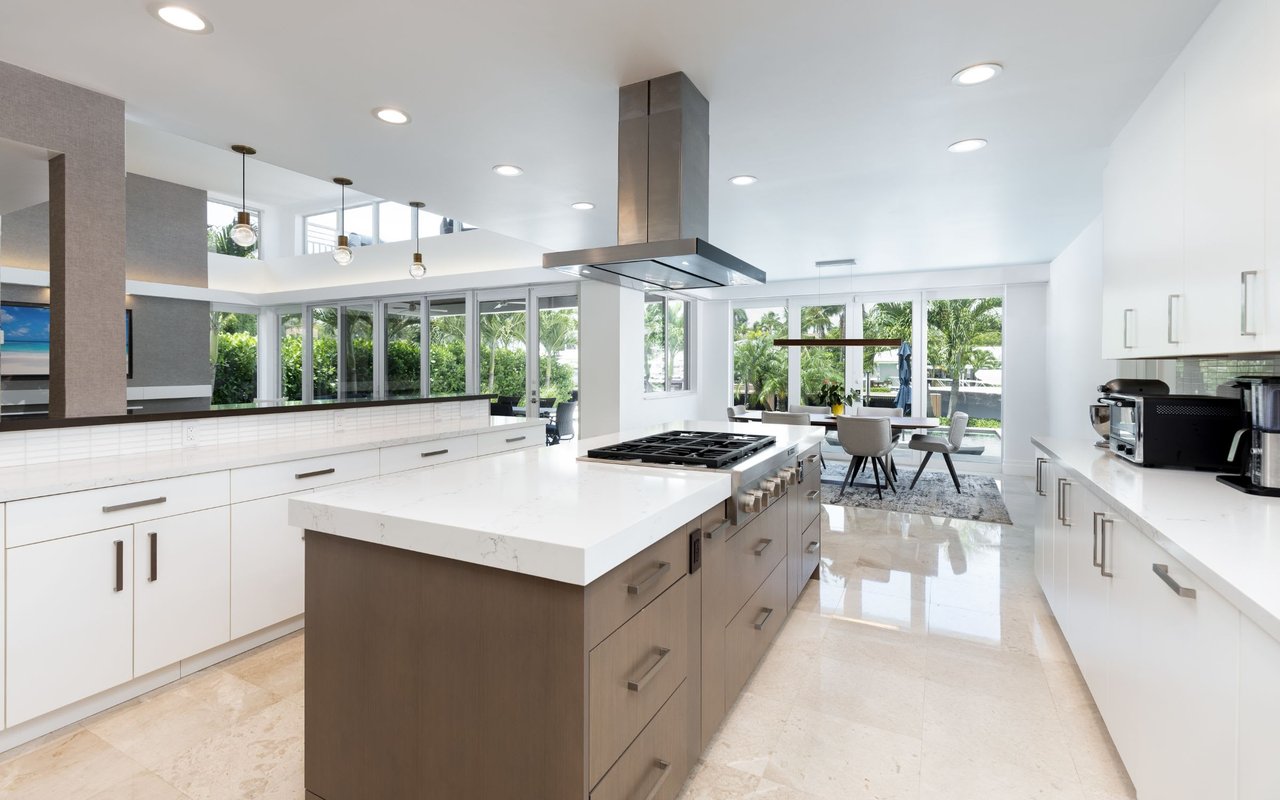
900 E Atlantic Ave #18 Delray Beach, FL 33483